Warehouse management, moved off spreadsheets.
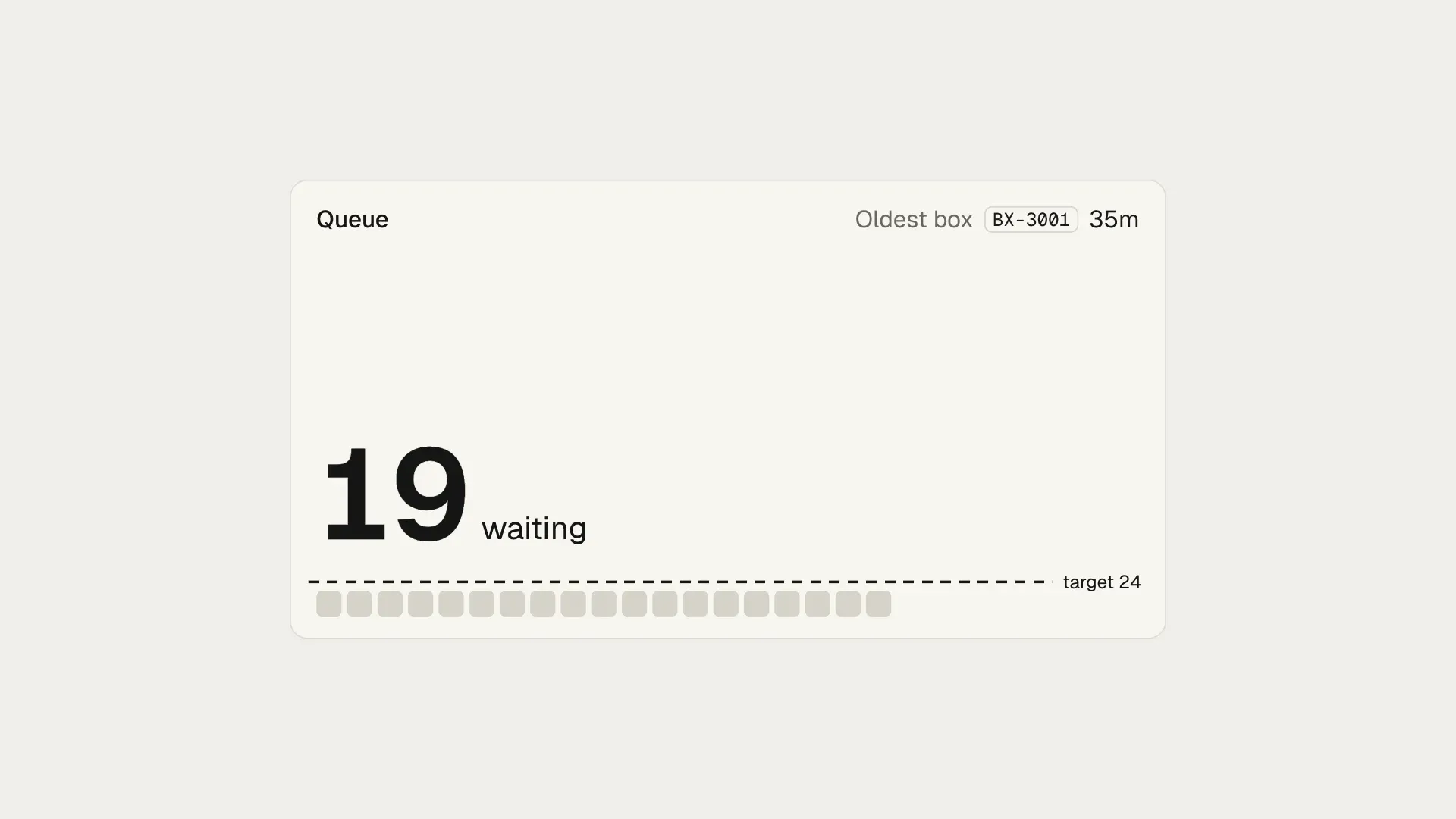
OnFull is no longer live. I rebuilt the screens for this case and rethought the parts the original got wrong.
Overview
OnFull WMS runs the daily work of warehouses and distribution centres. I led product design, from on-site research to the interface.
Problem
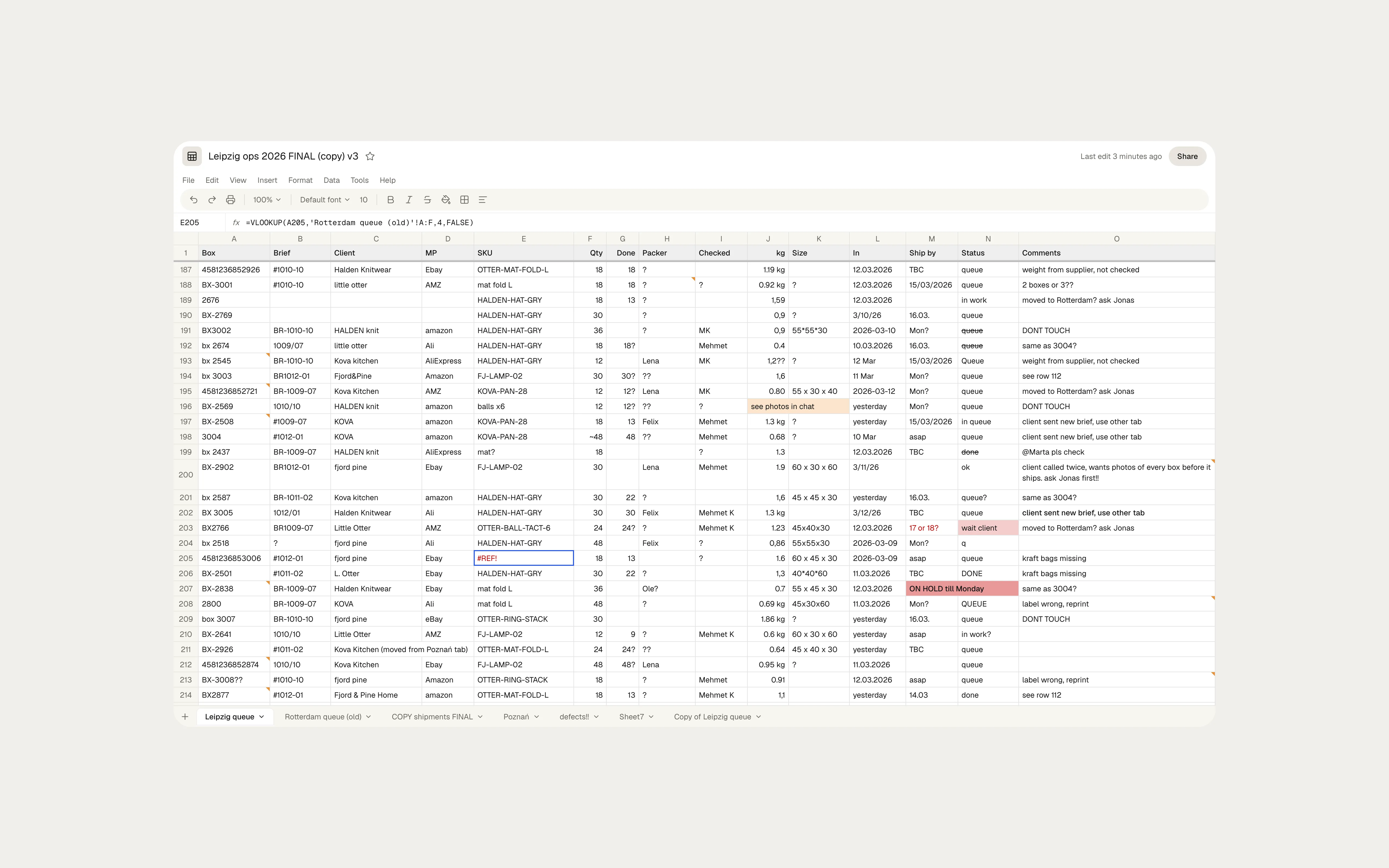
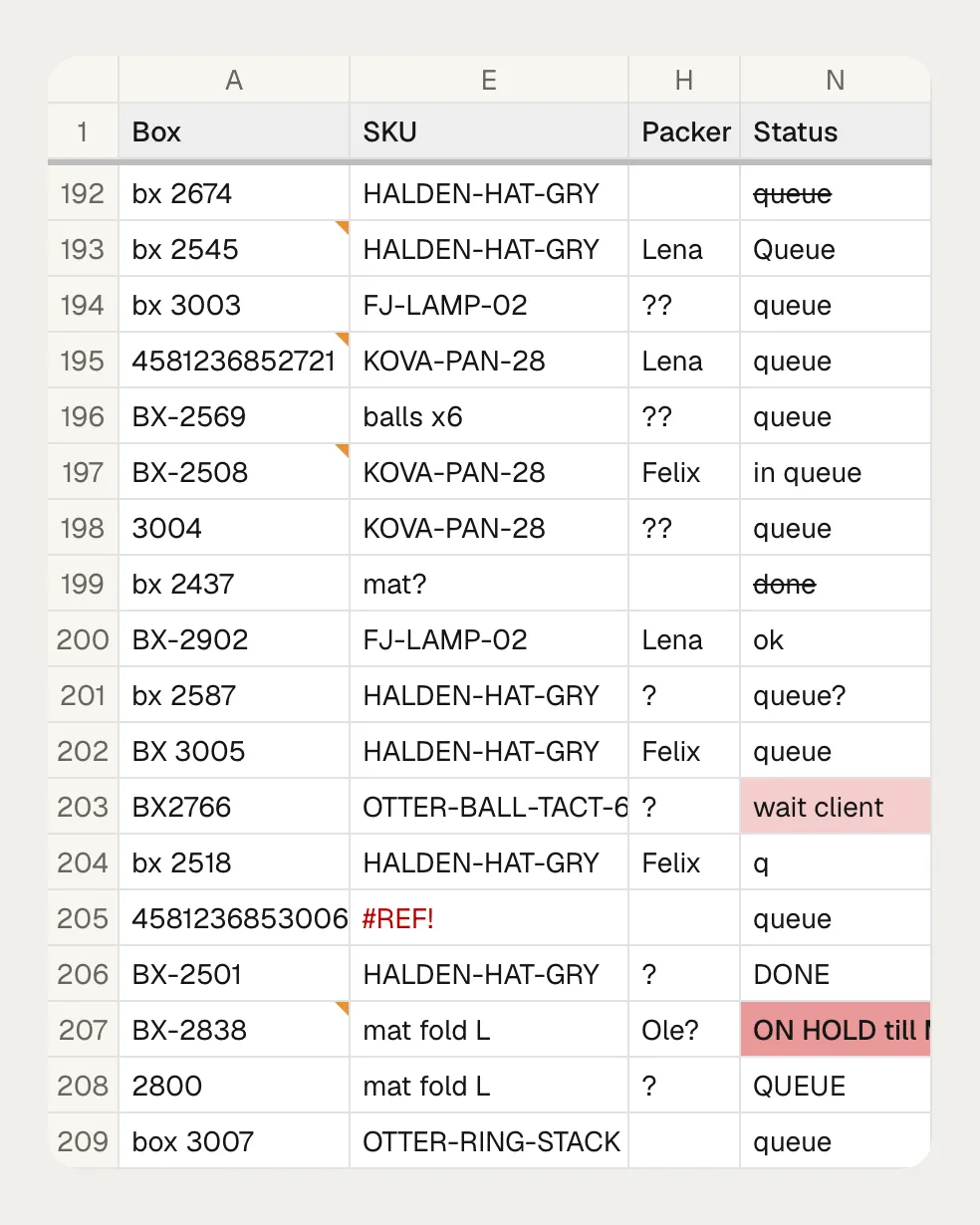
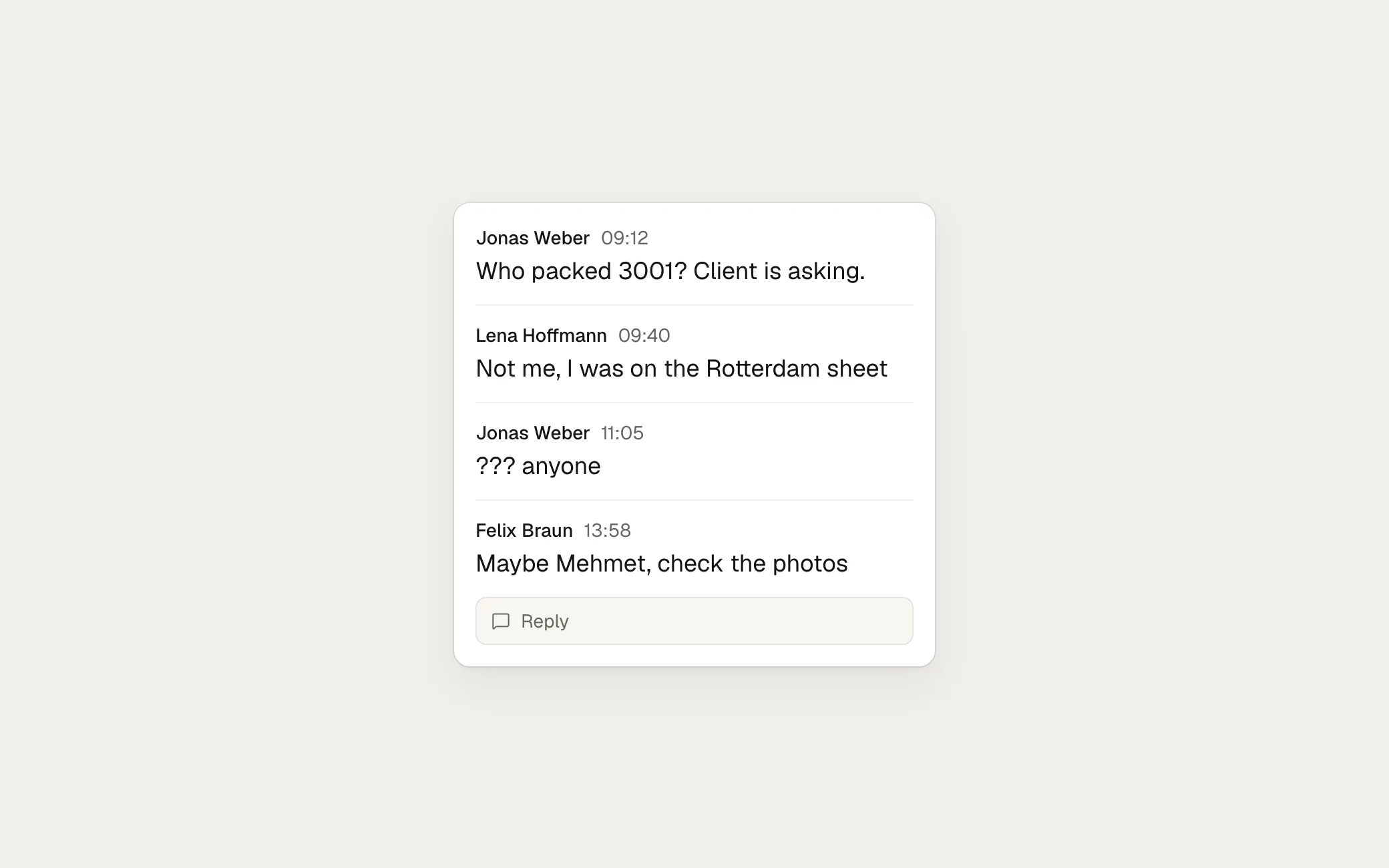
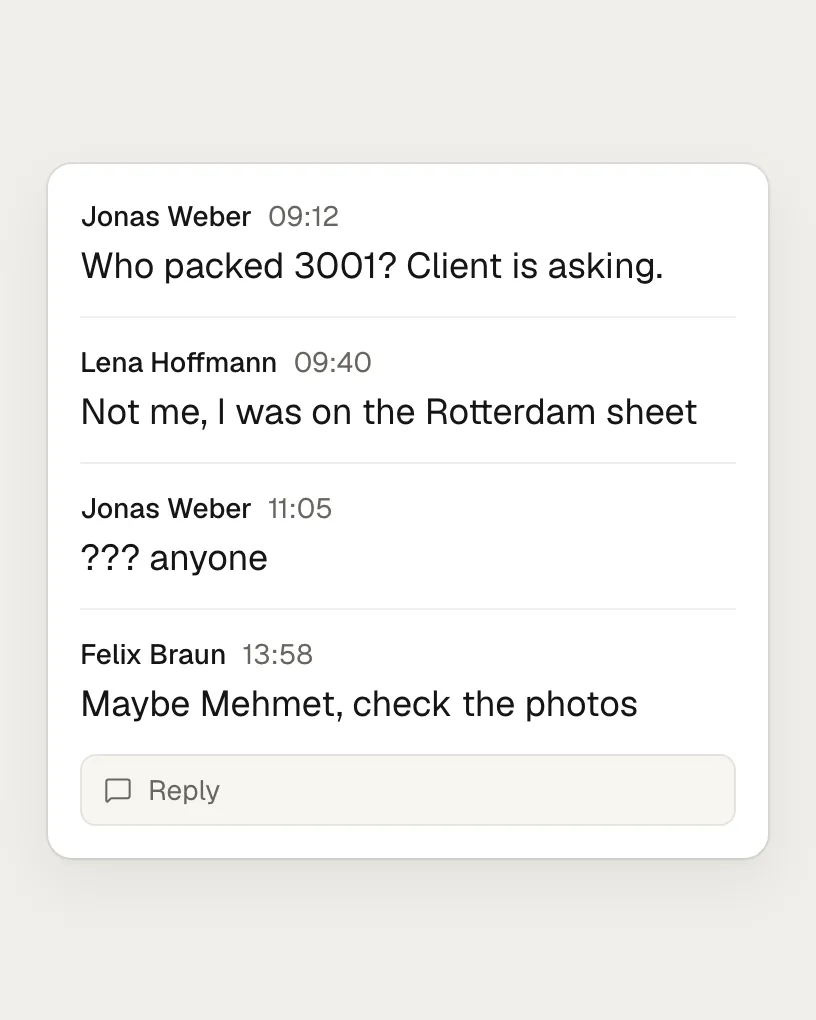
Warehouses tracked stock in Google Sheets. We visited several of them to see where that broke down and what to fix first.
Supervisor
I want an intuitive user interface, so I can easily assign task to my team and track their progress, reducing manual effort and errors.
Picker
I want a mobile-friendly design that allows me to access the WMS from my handheld device, so I can efficiently locate and pick items without returning to a computer.
Manager
I want real-time visibility into inventory levels and order status, so I can make informed decisions and ensure orders are fulfilled on time.
Receiver
I want a user-friendly system for entering and validating received items, so I can minimize errors and expedite inventory updates.
The service
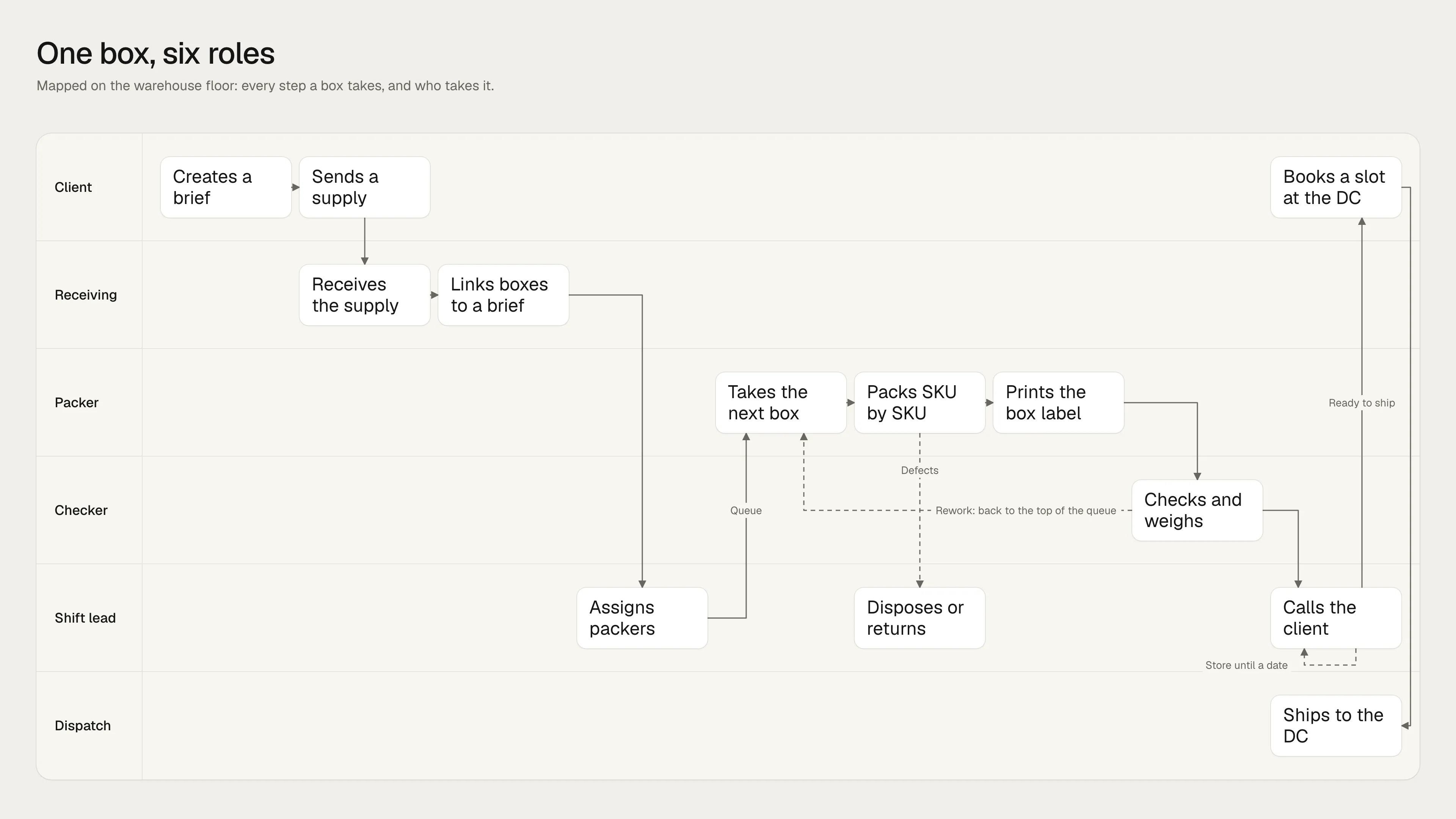
Warehouse work is a chain of hand-offs: receivers, pickers, supervisors and managers each own a stage, and every hand-off used to happen in a spreadsheet.
Mapping the whole chain first showed where goods and responsibility got lost between stages, and that decided what we built first.
Stock management
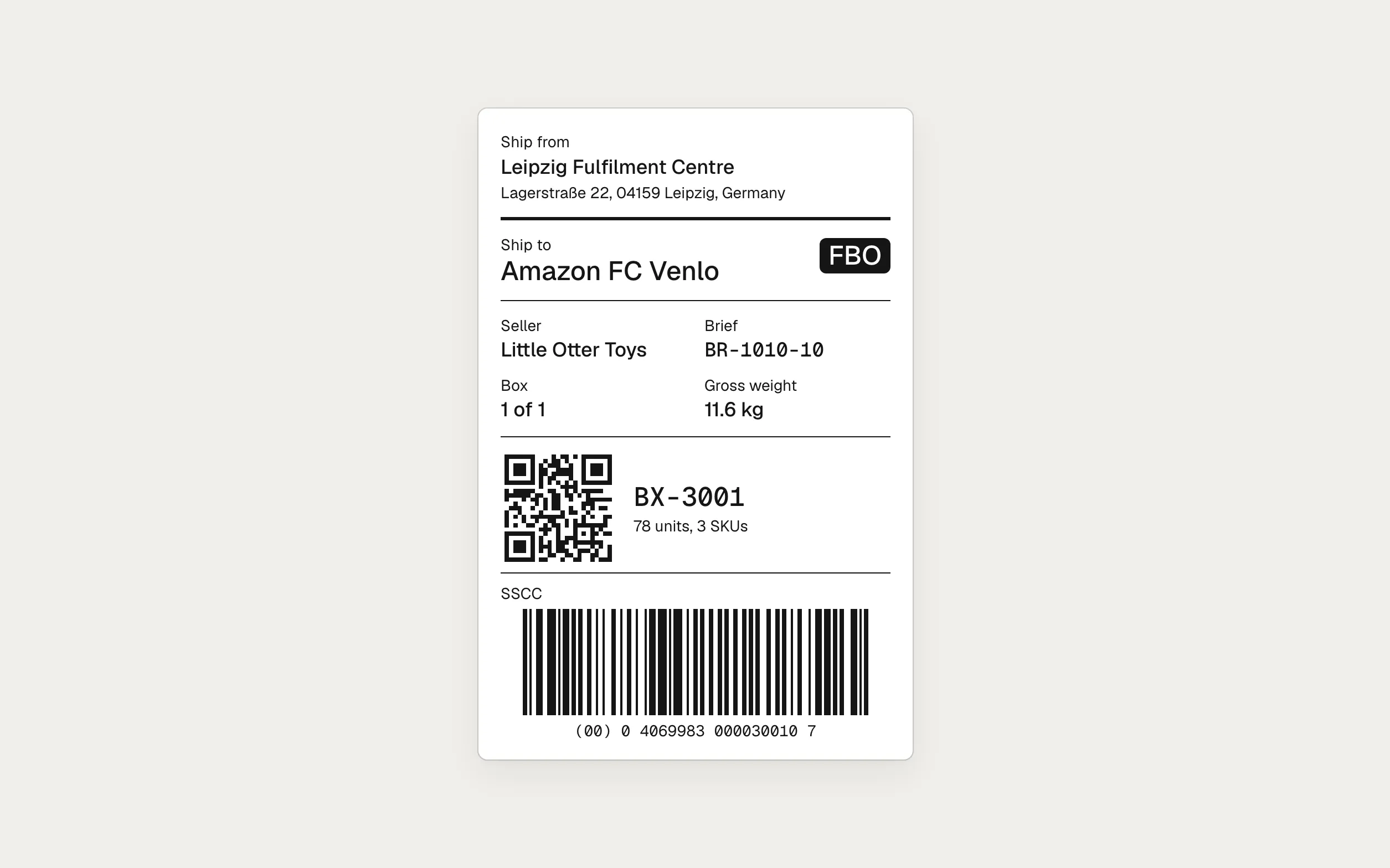
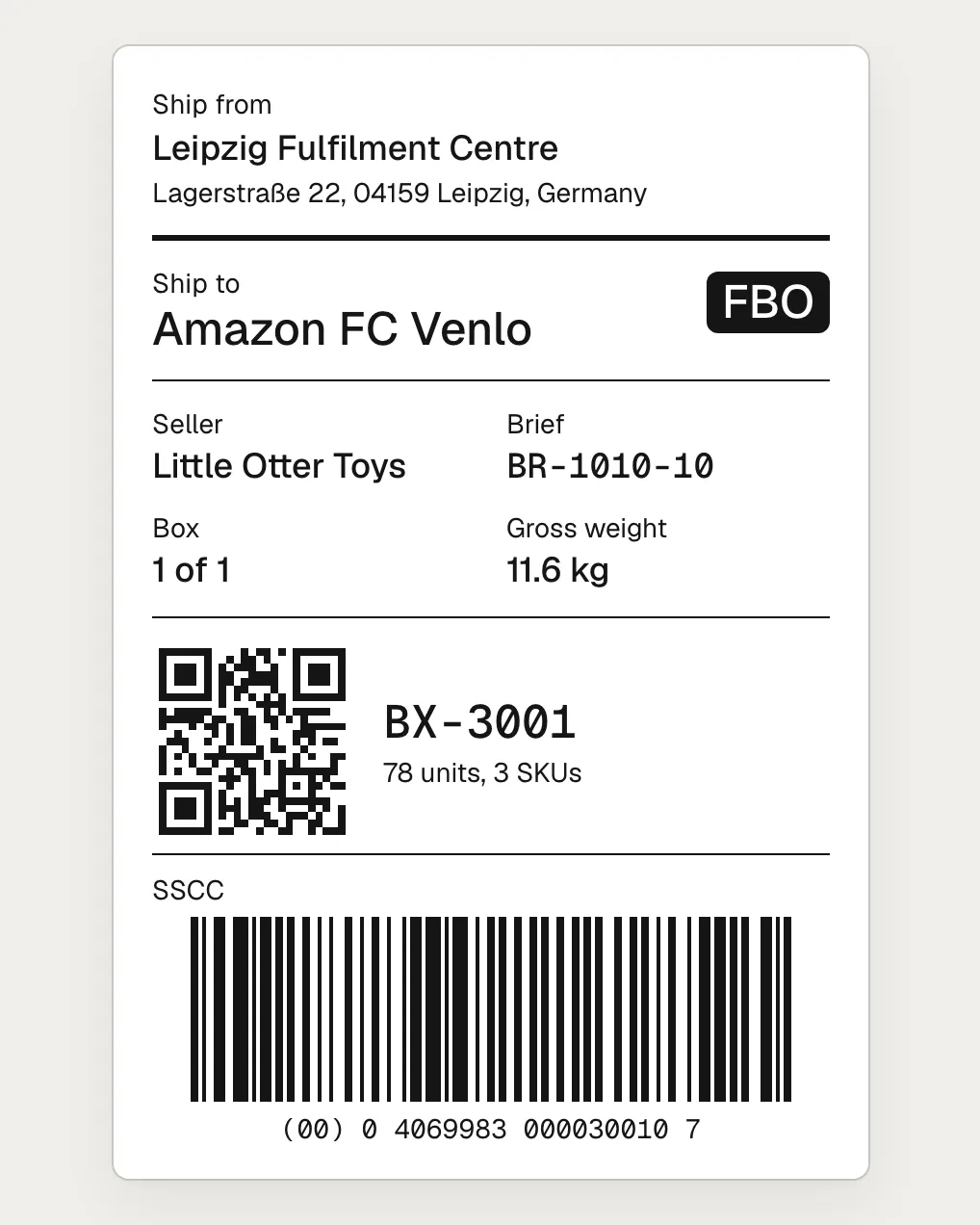
Each warehouse sets the order of its stages, from reception to defect sorting. Every batch keeps its acceptance documents, video proof and a QR sticker for each pallet or box.
The packer
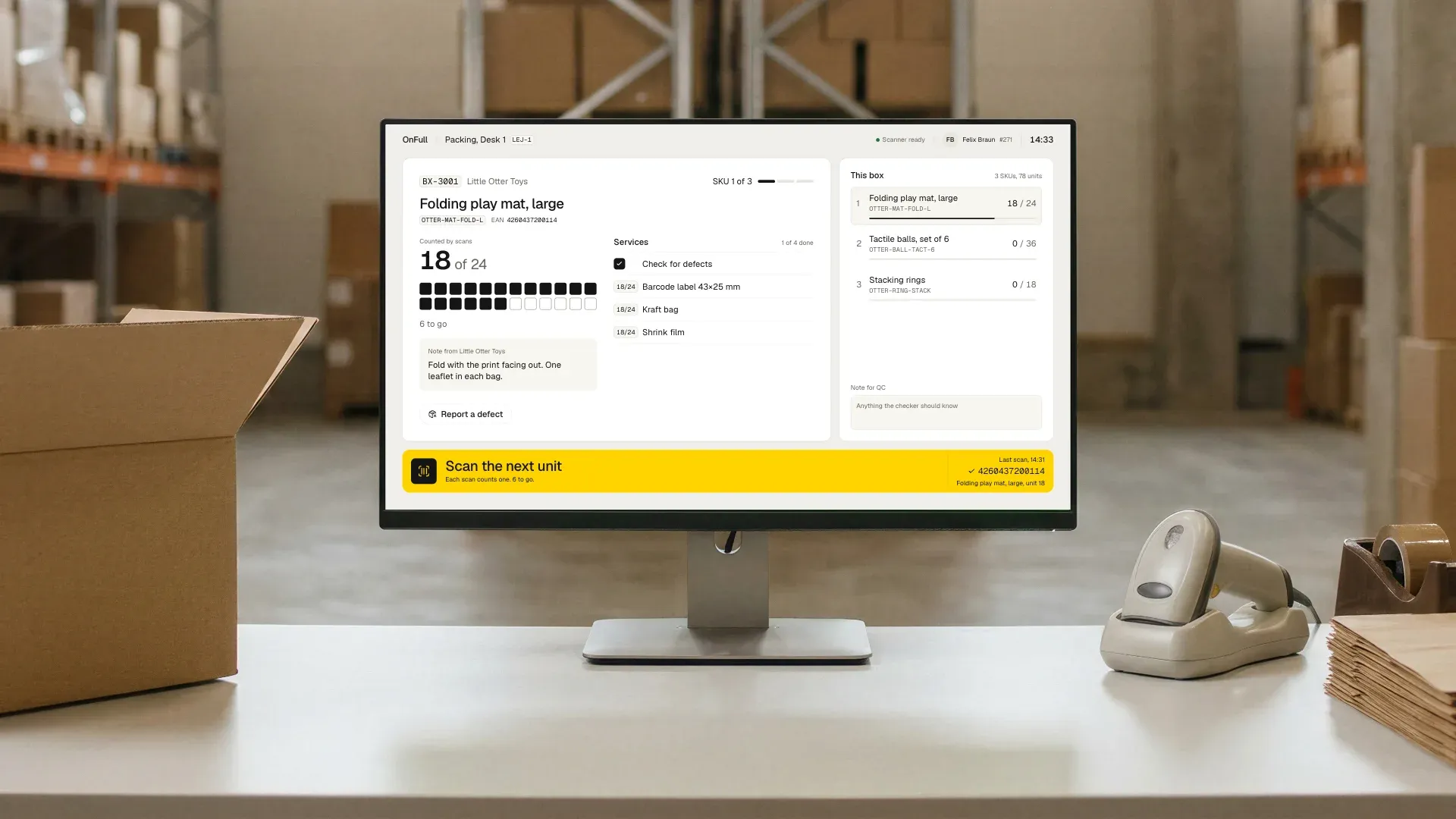
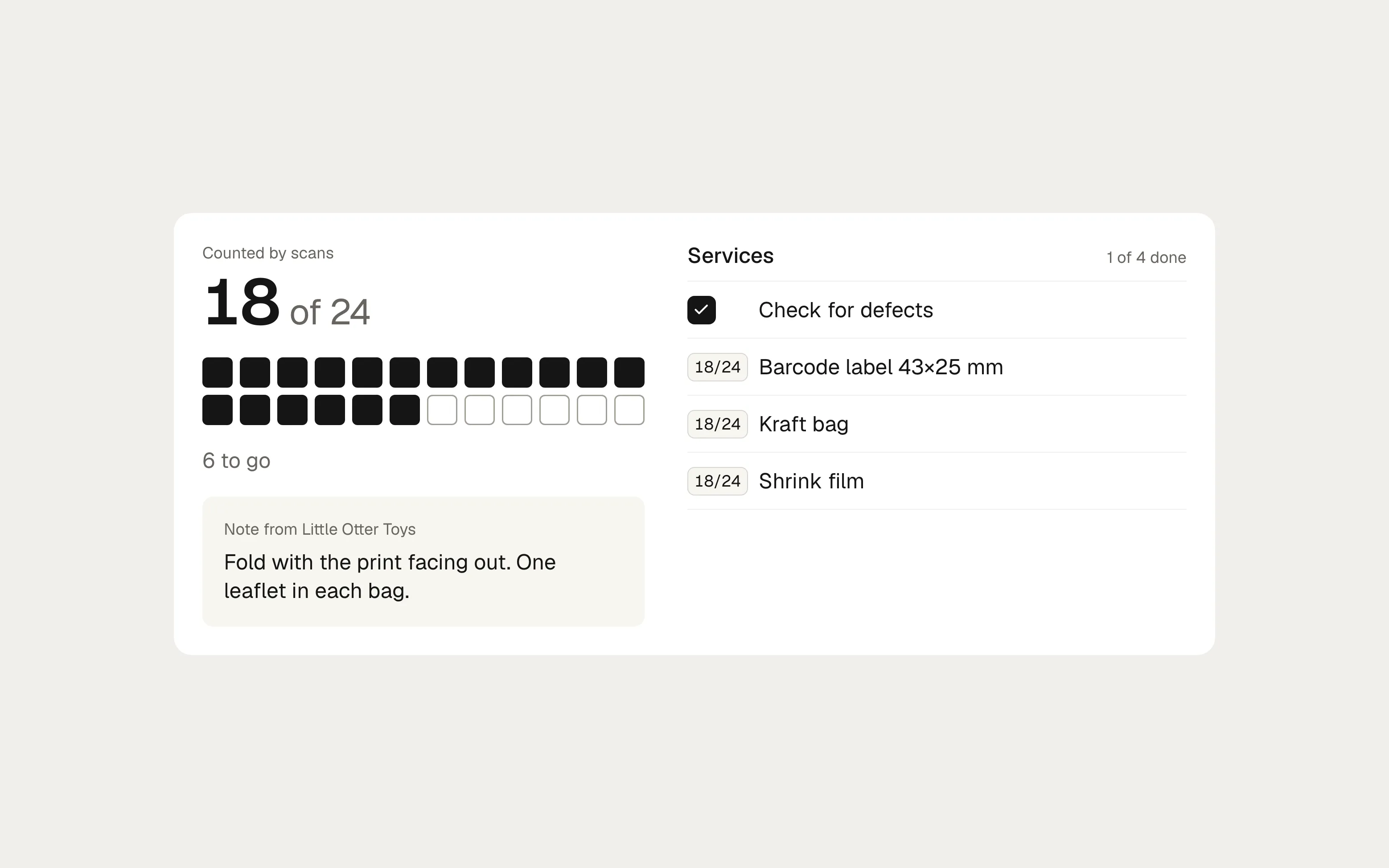
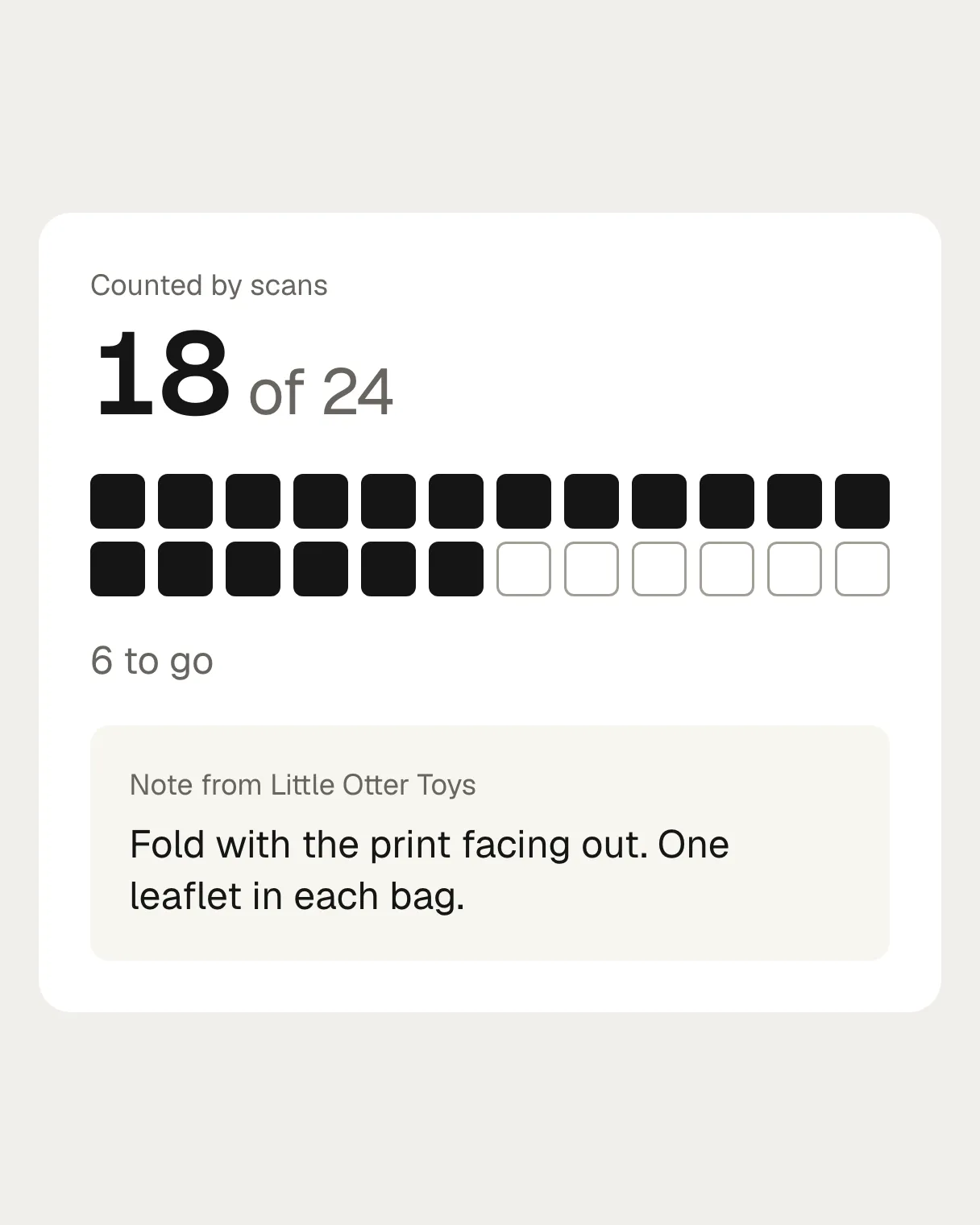
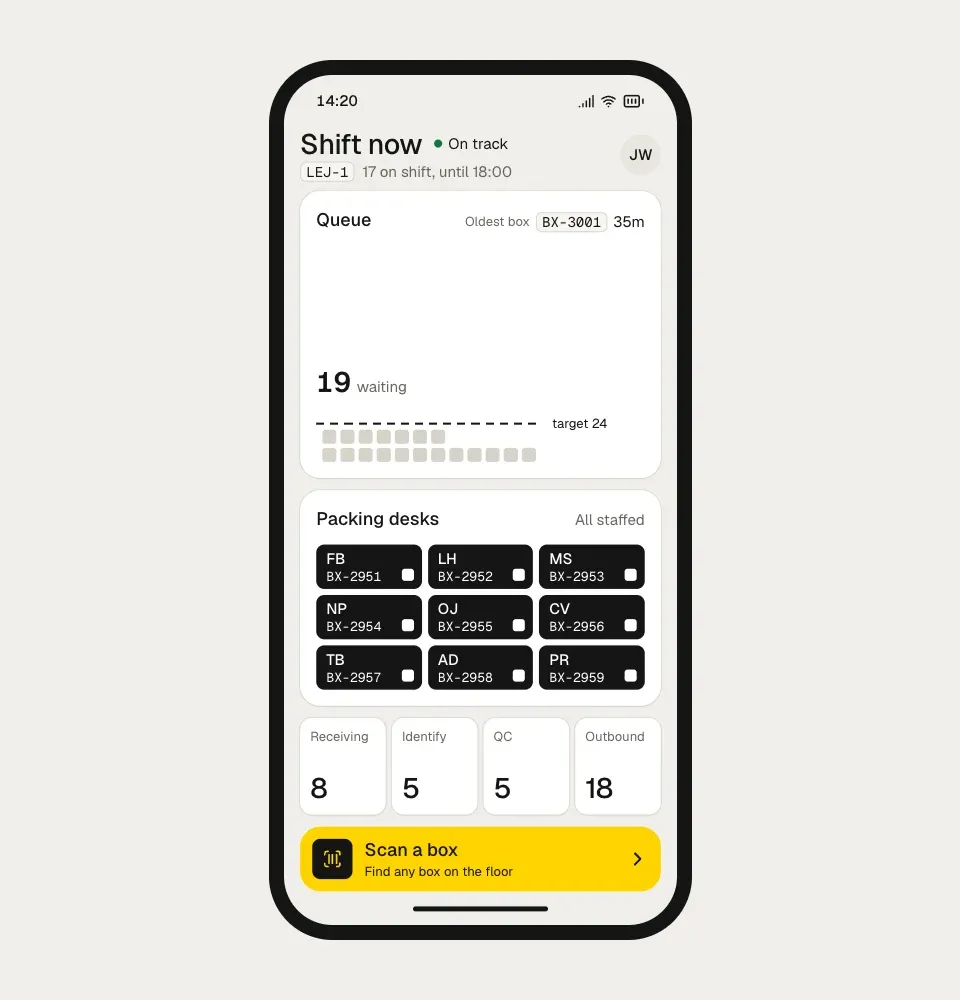
A packer sees only the next box and what to do with it. Every unit is counted by a scan, not by hand.
Shift leads and managers
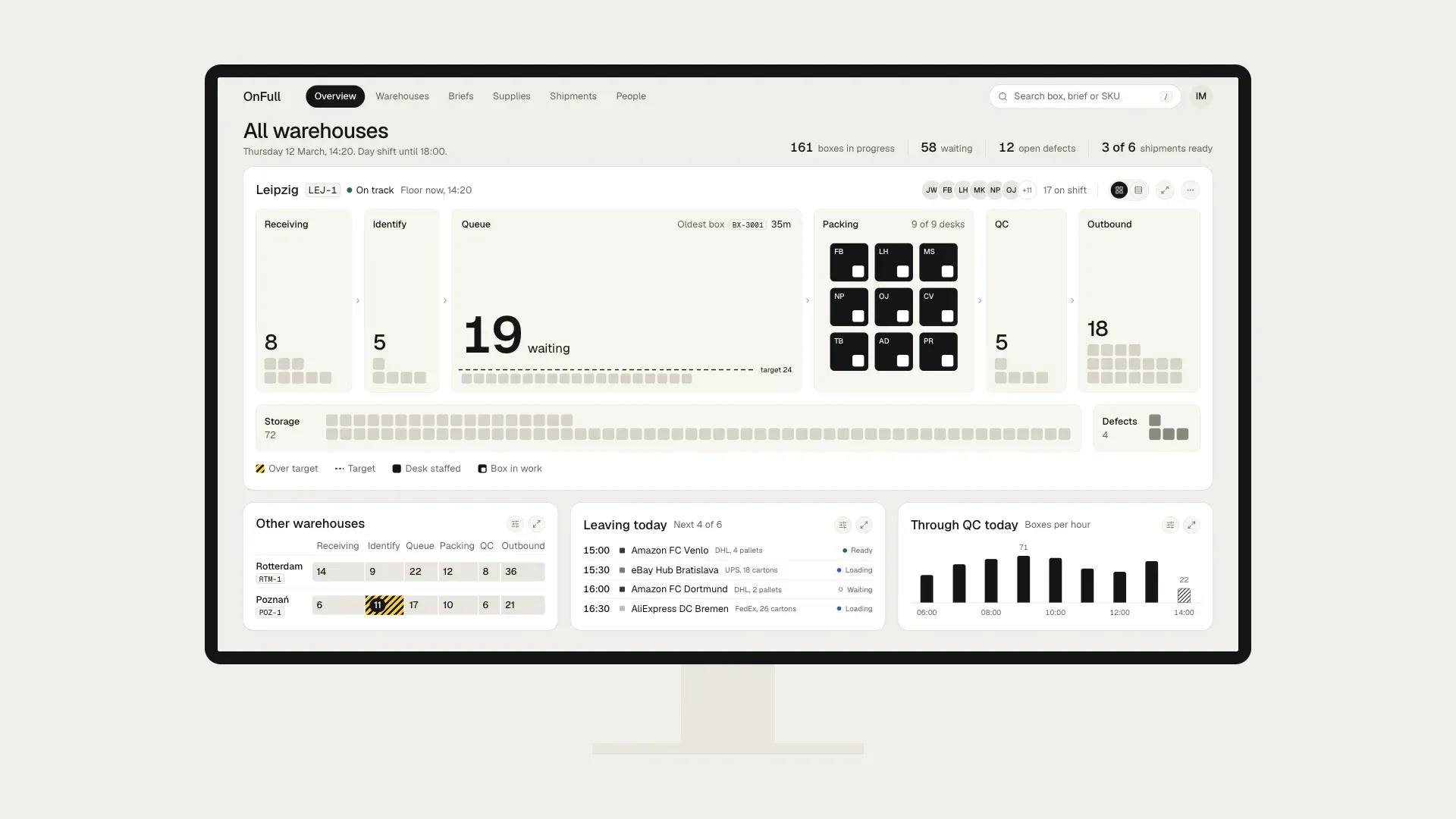
The office sees every warehouse and where work gets stuck, as it happens. A shift lead sees the same floor on a phone, with one action to take.
People and access
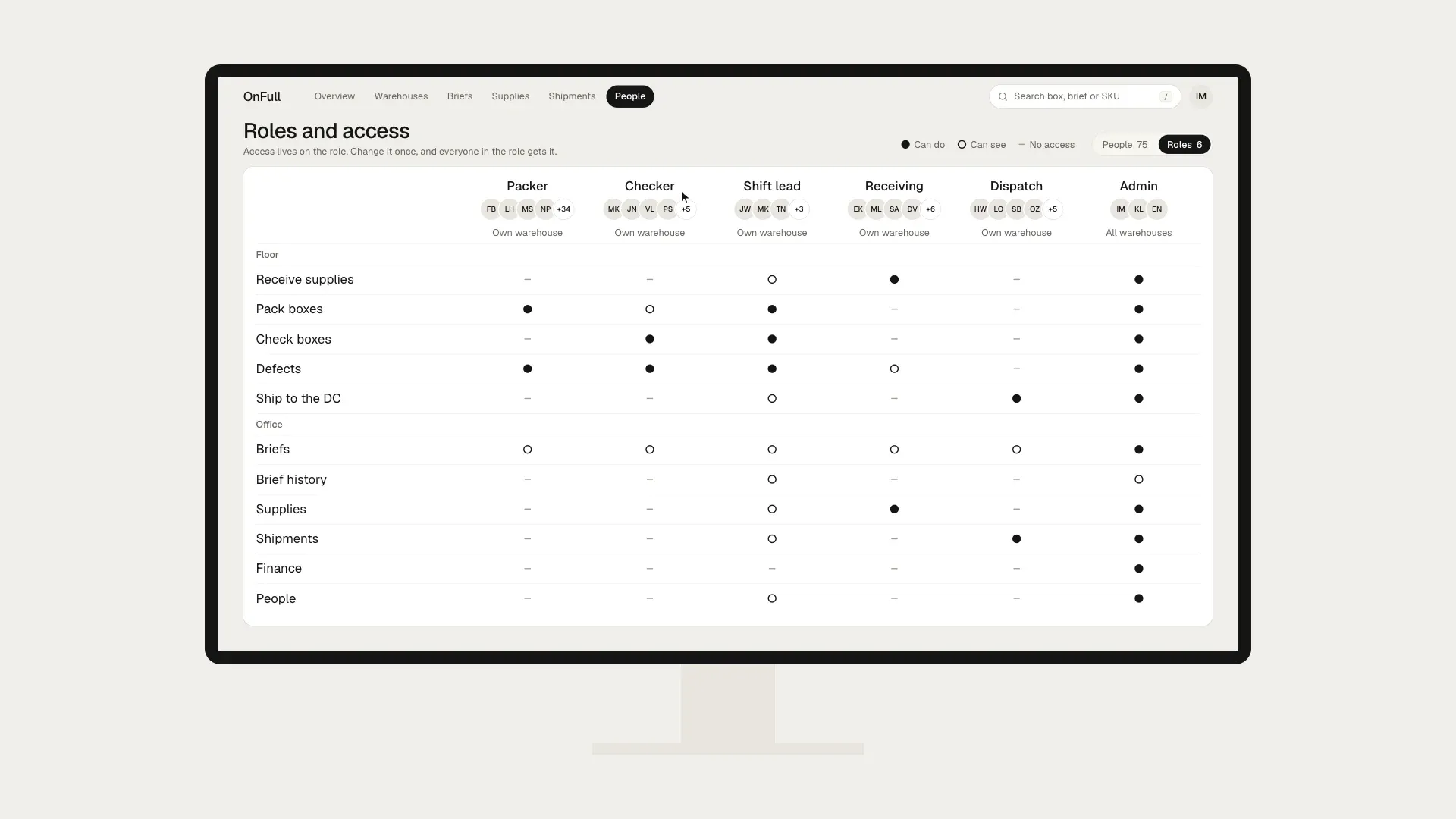
Everyone signs in as themselves, and access comes from their role. Change a role once, and everyone in it gets the change.
The floor language
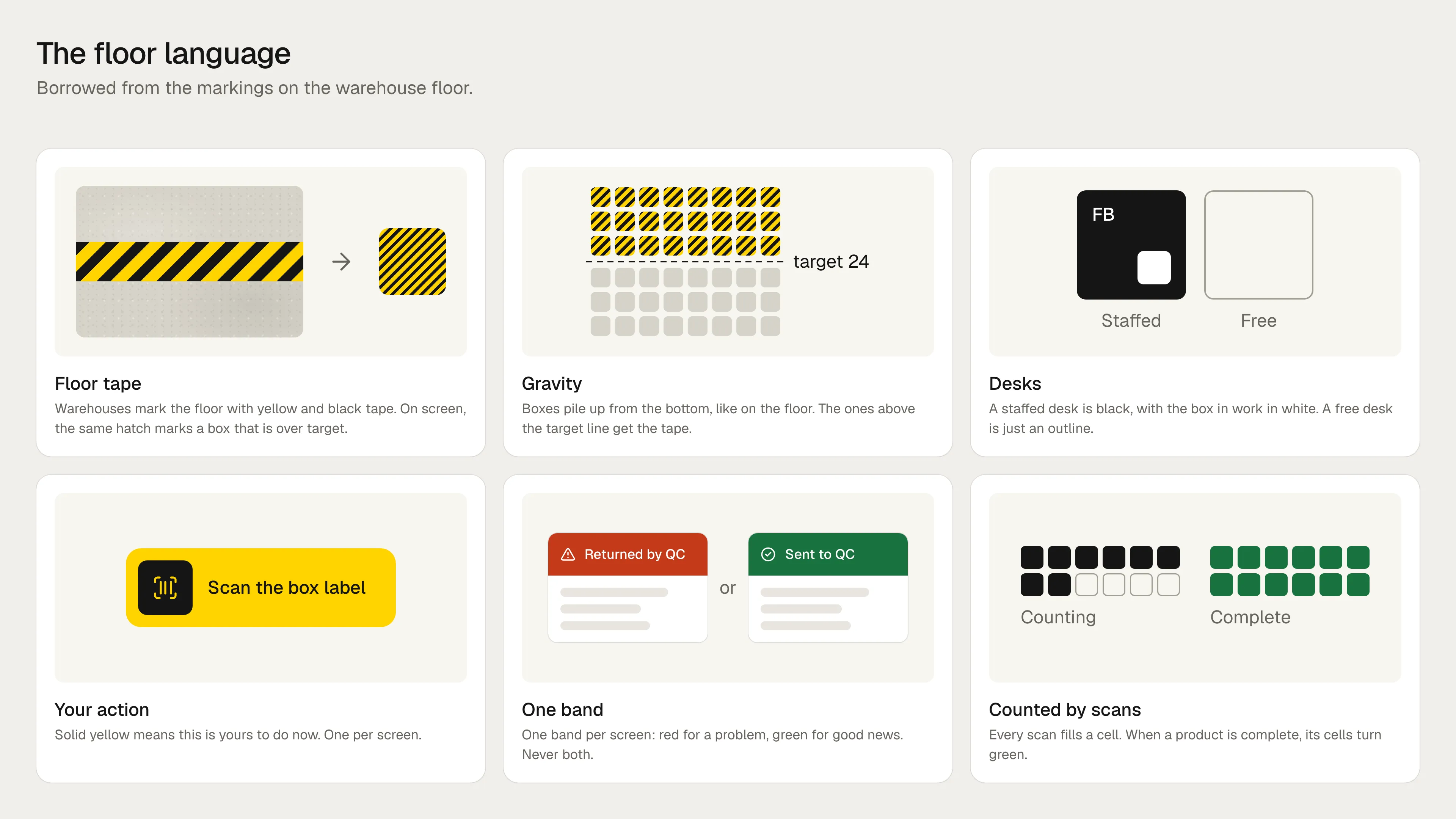
I borrowed it from the markings on the warehouse floor: tape means over target, yellow means it’s your move.
Dispatch and order checks
Managers attach or generate consignment documents in one panel before goods move on. Admins configure how orders are checked, and any item can be traced by ID or SKU through every box it passed.
Outcome
QR codes and real-time tracking replaced the spreadsheets across every stage, from reception to defect sorting. We shipped module by module and fed user feedback into each release.